
Nutrition
Information | Exercise
and Physiology Information
How Much Muscle Can You
Gain?
By
Maki Riddington
One frequently asked question which always seems to plague gym
instructors, Internet message boards, various magazines and books
has to do with muscle gain. Many of us have heard or have overheard
the local gym guru or the community fitness expert boasting about
how much he/she has gained, or how one of their clients has gained
10 pounds in a month. When someone hears this, a light goes on
inside their head and it kicks off a series of thoughts that quickly
translate into a set of unrealistic goals. I will say this: that
from whichever mouth it comes, whether a highly regarded coach,
trainer or a bodybuilder, the fact of the matter is that it’s
physiologically impossible to achieve this muscle status! Later
on, I’ll explain why.
Often, people making
this claim have a faulty perception of how the body either works
or are just super-optimistic. Of course, it’s not only the
gym (freaks) that espouses this myth; it can be traced to numerous
ads in a variety of muscle magazines lining the bookstore shelves.
The bodybuilding industry, nowadays, thrives on people who are
hungry for a quick change. They are ready to buy into the notion
that a change can be accomplished because a certain ad lays claims
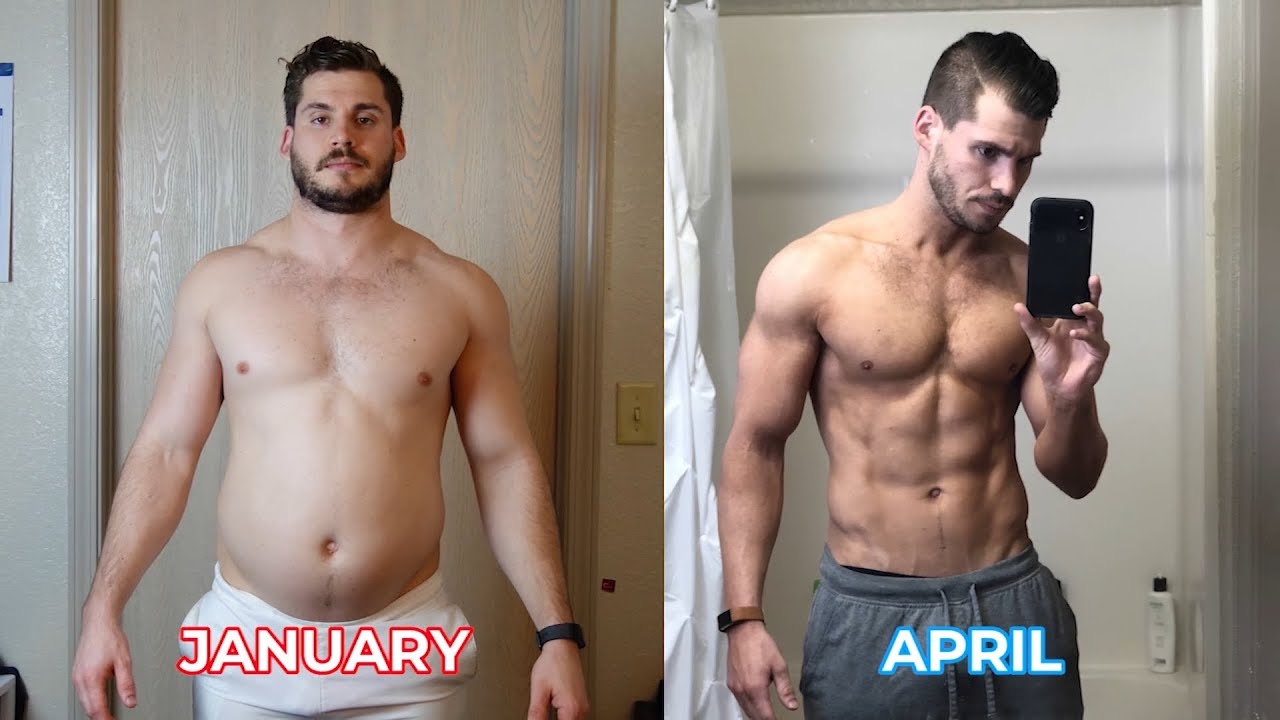
by way of an incredible cut and paste transformation. Frequently,
it’s a beginner who testifies to the astounding feat of
gaining 30 pounds over a period of several months. This is, no
doubt, a great achievement but most have been fooled into believing
that a large percentage is muscle when most of it is due to an
increase in glycogen stores, body fat and water.
Now it’s not
my intention to dash your hopes or crush your dreams. I’d
merely like you to know that the body simply cannot adapt at the
speed claimed by many. Canadian strength coach and author Chris
Thibaudeau states: “making physical changes takes time;”
this couldn’t be closer to the truth. So be forewarned that
in your quest to change or morph yourself into the next Ronnie
Coleman; the transformation is going to take more than a few months.
Our bodies are equipped with systems that need to adapt together
over a period. This is what you should bear in mind while working
towards the goal of a more muscular physique.
So How Much
Muscle Can You Gain.
Sometimes we are our
own worst enemy when it comes to gaining muscle. Nine times out
of ten, most of us fail in the dedication department. What starts
out as a carefully planned and calculated program, ends up hitting
some bumps along the way. However, even if we are dedicated (some
may call it obsessed) and diligent about our nutrition, with proper
training and recuperation practices, we still would not be able
to add more than 1 pound of muscle in a week. That’s right,
only one pound a week--and this is assuming you’ve had a
darn good week both inside and outside the gym!
Often, people believe
that if they take in 3500 more calories during a week that they
will be successful at packing on slabs of muscle. However, the
old adage that one pound equates to 3500 calories is right for
fat but NOT muscle. If you want to gain one pound of fat, then
you should be taking in an extra 3500 calories a week. Now there’s
one way of putting on some weight!
As I mentioned earlier,
the body’s multiple systems are all intricately interconnected:
if one system has not undergone the proper adaptation, then the
results will show in the form of a failure to produce optimal
hypertrophy of the muscle complex. For example, if we were to
look at some of the soft tissues involved in the hypertrophy process
of the muscle complex, we’d see that muscle would generally
adapt to a load within several days. Unlike the tendons and ligaments,
studies have shown that muscle responds by adapting after a period
of several weeks or even months of progressive loading (McDough
& Davies, 1984). It also should be noted that the protein
turnover rate in collagen occurs approximately every 1000 days.
This clearly shows that even if one were to gain in bodyweight,
the body would only be able to accommodate a certain amount in
the form of muscle; otherwise, the muscles would fall prey to
injury due to the time-span in adaptation rates for various other
tissues. Those who scoff at this and continue to believe they’ve
gained super size over such a short period forget, as suggested
earlier, that much of the increased bodyweight is largely due
to increased body fat stores, glycogen and water. Hypertrophy
of the muscle complex has so far, been shown to be controlled
by what is known as protein turnover (the breakdown of damaged
muscle proteins and creation of new and stronger ones). This process
takes time. Just as the many living organisms around us in nature
require time to grow, so do our muscles. In our enzymes the protein
turnover rate occurs approximately every 7-10 minutes. In the
liver and plasma, it’s every 10 days. And in the hemoglobin
it’s every 120days.In the muscles, protein turnover rate
occurs approximately every 180 days (6 months). This lends even
more support to the observation that the turnover rate limits
the natural body (of the non drug-using athlete, bodybuilder)
in building muscle quickly.
The Colgan Institute
of Nutritional Sciences (located in San Diego, CA) run by Dr Michael
Colgan PHD, a leading sport nutritionist explains that in his
extensive experience, the most muscle gain he or any of his colleagues
have recorded over a year was 181/4 lbs. Dr Colgan goes on to
state that “because of the limiting rate of turnover in
the muscle cells it is impossible to grow more than an ounce of
new muscle each day.” In non-complicated, mathematical terms,
this would equate to roughly 23 pounds in a year! Keep in mind
that high-level athletes are the subjects of these studies.
Putting It
All Together
Now that I’ve
put a damper on your expectations you can step back and take a
closer look at your training, nutritional practices and recuperation
tactics. There’s no need to beat yourself up because you’ve
only been able to gain a pound a week for the last 6 weeks. If
anything, assuming your body fat levels have been kept at bay,
you’re probably on the right track.
When it comes to muscle
gain there is no dramatic technique or quick fix that will allow
you to pack on more muscle naturally. It’s better to stay
focused and realistic by training hard, eating meticulously and
spending time to recuperate properly; this will result in your
achieving a more muscular physique. Keep in mind that it’s
physiologically impossible to gain more than one pound of lean
muscle per week. For most weight-gainers, .5 pounds per week would
be an even more realistic goal as they reach their genetic limit.
Remember that gaining muscle is a long-term project and not something
that can be simply turned on. If you’re dedicated and diligent
in your efforts, you’ll not be disappointed!
| About
Maki Riddington
Maki Riddington is a CPT,
Body Recomposition and Strength and Conditoning Specialist
based in Richmond British Columbia. He focuses on athletic
and strength conditioning. For more info go to www.dynamicconditioning.ca
and join his free online newsletter. Each monthly issue
is packed with all the latest training info. MORE
>>> |
|